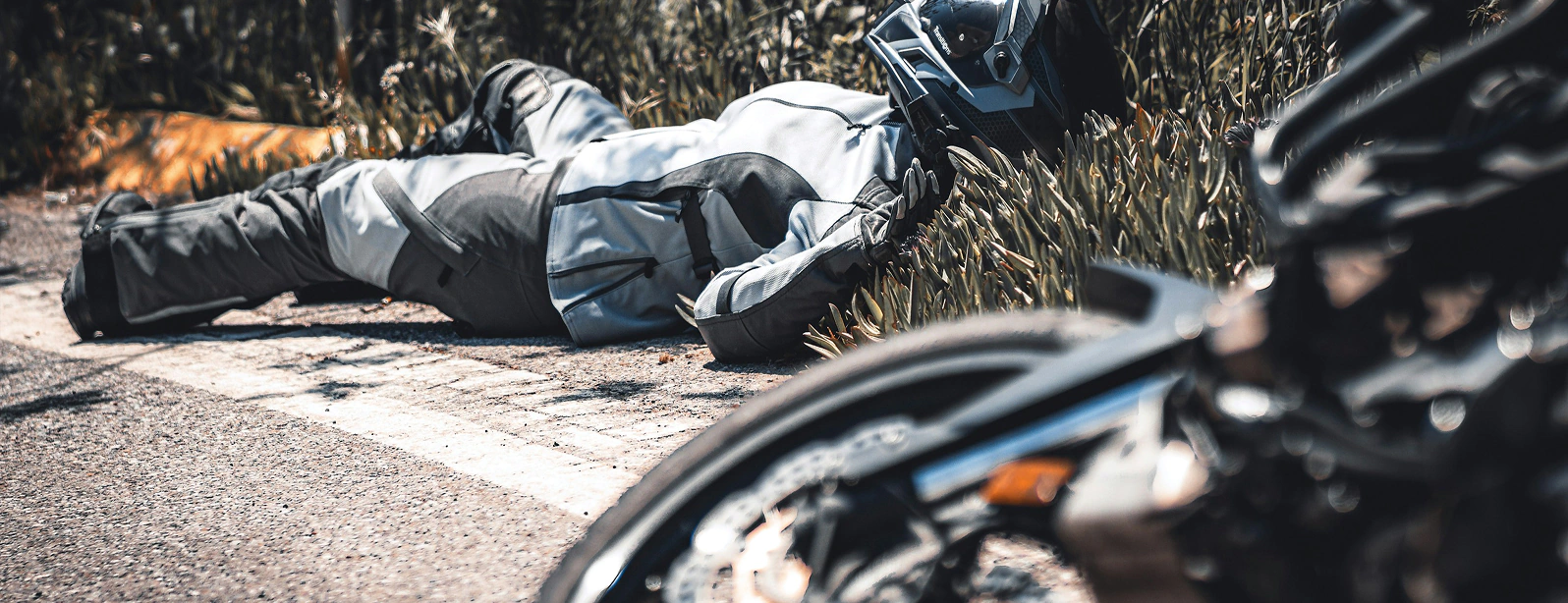

California Motorcycle Accident Law: Protecting Riders’ Rights After a Crash
Motorcycle accidents are among the most devastating collisions on California’s roads. Even a low-speed crash can cause catastrophic injury due to the lack of physical protection.
Motorcyclists often face not only physical trauma but also legal and insurance challenges — including bias from adjusters and juries who unfairly assume riders are reckless.
At Bakh Law Group, PC, we represent injured riders and their families across California. Our attorneys understand the unique risks, regulations, and evidentiary issues that define motorcycle accident litigation.
This comprehensive guide explains California’s motorcycle laws, fault standards, and what riders need to know to recover fair compensation after an accident.
California has more registered motorcycles than any other state — over 900,000 as of 2025 — and one of the most active riding cultures in the country.
Unfortunately, it also leads the nation in motorcycle-related injuries and fatalities.
Because motorcyclists have little physical protection, they are 28 times more likely to die and 4 times more likely to be seriously injured than occupants of passenger vehicles, according to NHTSA data.
These risks are magnified by factors like driver inattention, unsafe lane changes, speeding, and poor road design
Helmet Law (Vehicle Code §27803)
All motorcycle riders and passengers in California must wear a U.S. DOT–approved helmet at all times.
Failure to wear a helmet may not automatically bar recovery, but under comparative fault (CACI 405), a jury can reduce damages if lack of a helmet contributed to the severity of the injury.
Lane Splitting (Vehicle Code §21658.1)
California is the only state where lane splitting — riding between lanes of slow or stopped traffic — is explicitly legal.
However, it must be done safely. The California Highway Patrol (CHP) advises:
- Do not exceed 10–15 mph faster than surrounding traffic.
- Avoid splitting at speeds above 30 mph.
- Never split near large vehicles like trucks or buses.
If an accident occurs during lane splitting, liability depends on whether the maneuver was reasonable and safe under the circumstances.
Passing and Lane Usage
Motorcyclists are entitled to full use of a lane. Vehicle Code §21760 requires drivers to give motorcycles adequate space and prohibits unsafe passing.
Drivers who “crowd” or force a rider out of a lane can be held liable for negligence or even reckless endangerment.
Motorcycle accidents are governed by the same negligence principles as car collisions but often require deeper reconstruction due to the dynamics of the crash.
Under CACI 400 (Negligence—Essential Elements), the plaintiff must prove:
- The defendant owed a duty of care;
- The defendant breached that duty;
- The plaintiff was harmed; and
- The defendant’s negligence was a substantial factor in causing that harm.
Common forms of negligence in motorcycle cases include:
- Unsafe lane changes
- Left-turn violations
- Speeding or tailgating
- Distracted driving (texting, phone use)
- Opening car doors without checking traffic (“dooring”)
- Failing to yield at intersections
Motorcyclists are often blamed unfairly, making early evidence collection — such as GoPro footage, dash cam video, and helmet camera data — essential.
California’s pure comparative negligence system (CACI 405) applies to motorcycle cases.
Even if the rider contributed to the accident — for example, by speeding or riding without reflective gear — they may still recover damages, reduced by their percentage of fault.
For instance, a rider found 25% at fault in a $200,000 case would still receive $150,000.
Defendants frequently raise comparative fault arguments, including claims that the rider:
- Was lane splitting unsafely
- Was speeding excessively
- Was not wearing a helmet
- Was under the influence or fatigued
An experienced attorney can rebut these claims through evidence, witness statements, and accident reconstruction.
Insurance adjusters and juries sometimes assume that riders are reckless by nature.
This bias can unfairly reduce settlement value unless countered by clear factual evidence — such as dash-cam footage, traffic light data, or testimony showing the rider’s lawful conduct.
BLG attorneys often use expert reconstructionists and ride behavior data from the motorcycle’s onboard sensors to overcome this stigma and prove the driver’s fault.
Some motorcycle crashes result not from rider error or another driver, but from mechanical failure or defective parts.
Common issues include:
- Tire blowouts
- Brake or throttle malfunctions
- Defective handlebars or steering systems
- Faulty fuel delivery or electrical systems
Under California’s product liability laws, manufacturers, distributors, and repair shops can be held strictly liable if a defect caused the crash.
These cases often involve expert engineering testimony and preservation of the motorcycle as evidence.
As in car cases, an owner may be responsible for lending their motorcycle to an unlicensed or unsafe rider.
Under CACI 724, negligent entrustment occurs when:
- The defendant owned or controlled the motorcycle;
- The defendant permitted another person to operate it;
- The defendant knew or should have known the rider was unfit; and
- The rider’s negligence caused the injury.
Similarly, under Vehicle Code §17150, owners are liable for negligence by anyone using their motorcycle with their permission.
Motorcycles are particularly affected by unexpected hazards — debris, sudden braking by a car, or a pedestrian stepping into traffic.
Under CACI 452 (Sudden Emergency Doctrine), a rider or driver confronted with an emergency not of their own making is not negligent if they act as a reasonable person would in that moment.
This doctrine often arises in cases where a driver swerves to avoid an obstacle but collides with a motorcycle.
Because riders lack external protection, injuries are often catastrophic, including:
- Traumatic brain injury (TBI)
- Spinal cord and paralysis injuries
- Multiple fractures
- Severe road rash and scarring
- Internal bleeding and organ trauma
- Amputation injuries
These injuries often require extensive medical treatment, long-term care, and lifetime loss of earning capacity — all recoverable under California law.
A successful motorcycle claim can recover:
- Medical expenses (past and future)
- Lost income and earning capacity
- Property damage (bike repairs/replacement)
- Pain and suffering
- Emotional distress
- Loss of consortium (for spouses)
- Punitive damages (for gross negligence, DUI, or hit-and-run)
There are no caps on pain and suffering damages in motorcycle injury cases.
Under Civil Code §3294 and CACI 3949, punitive damages may be awarded when a defendant’s conduct demonstrates malice or a conscious disregard for safety — for example:
- Drunk or drug-impaired driving
- Extreme speeding or street racing
- Intentional harassment of a motorcyclist
Courts require clear and convincing evidence, but when proven, these damages can significantly increase recovery.
- Investigation & Evidence Collection – Police reports, witness statements, helmet cam footage, and black box data.
- Medical Evaluation – Documenting all injuries and treatment.
- Insurance Claims – Filing against the at-fault driver’s policy and/or UM/UIM coverage.
- Negotiation & Settlement – Your attorney seeks maximum compensation.
- Litigation (if necessary) – Filing a lawsuit and preparing for trial if settlement fails.
Motorcycle cases often involve both personal injury and property damage claims due to total vehicle loss.
Under CCP §335.1, you generally have two years from the date of injury to file a lawsuit.
If a government vehicle caused the crash, you must file a Government Tort Claim within six months (Gov. Code §911.2).
Failing to file timely may permanently bar your claim.
Immediately. Evidence like skid marks, debris, and electronic data disappear quickly.
Yes. Helmet cam or dash cam footage showing safe lane splitting can disprove fault claims.
No. You’re entitled to fair market value or repairs, whichever applies.
Amounts vary widely — minor injuries may settle for $20,000–$50,000; severe cases can exceed $1 million.
No. Always consult an attorney before providing statements to any insurer.
This can still qualify as a UM claim if evidence supports that another vehicle caused the danger.
Yes, in cases involving DUI, intentional misconduct, or extreme recklessness.
You must file a claim within six months (Gov. Code §911.2) before filing suit.
Simple cases can settle in 4–6 months; serious injury cases can take 1–2 years.
Yes. California allows recovery for mental anguish, PTSD, and loss of enjoyment of life.
Ensure they’re included in all reports and medical evaluations — passengers have independent rights to recover.
That is not a valid defense. Drivers must look carefully before changing lanes or turning.
Yes. Helmet manufacturers can be held liable for defective or noncompliant helmets that worsen injuries.
When a driver opens a car door into the path of a motorcyclist. It’s illegal under Vehicle Code §22517 and often causes severe injuries.
Yes, but drivers must adjust for weather conditions. Failing to do so can still be negligent.
California’s comparative fault still allows recovery, reduced by your degree of fault.
You may file an uninsured motorist (UM) claim if you can identify witnesses or partial license information.
You can bring a wrongful death action under CCP §377.60.
Yes, passengers can pursue claims against negligent drivers or vehicle owners.
Uber and Lyft have $1 million policies that may cover you depending on whether the driver was on duty.
You can still recover damages, but lack of a valid motorcycle license may affect comparative fault and credibility.
Liability depends on whether you were splitting safely; evidence like speed data and witness accounts can help prove your case.
You can file a claim against the city, county, or Caltrans for dangerous road conditions (Gov. Code §835).
You may have a product liability claim against the manufacturer or repair shop.
This is one of the most common causes of motorcycle crashes — usually the driver is at fault for failing to yield.
Speed may reduce damages if proven to contribute, but doesn’t bar recovery.
Two years from the accident date (CCP §335.1), or six months for government-related crashes.
Yes, but damages for head injuries may be reduced under comparative fault.
Yes, but only if done safely. The CHP advises splitting at moderate speeds and only when traffic is slow.
Get to safety, call 911, exchange information, take photos, and seek medical care immediately.
Use of This Website & No Attorney–Client Relationship
Use of this website does not create an attorney–client relationship between you and BAKH LAW GROUP, PC, JONATHAN BAKHSHESHIAN, ESQ., or any of its attorneys. Communication through this site—including email or contact forms—does not constitute confidential or privileged communications. Confidential information should not be submitted until after a proper, written engagement agreement is executed.
No Legal Advice Intended
The content on this website is provided for general informational purposes only and should not be construed as legal advice tailored to your specific situation. You should not act or refrain from acting based solely on any information contained here. Consult a qualified attorney for advice specific to your circumstances.
Attorney Advertising & Compliance
This website may constitute attorney advertising under California Rules of Professional Conduct. Nothing on this site guarantees a particular outcome. References to past results or case examples do not predict future results. No warranties or promises, express or implied, are made about the outcome of legal matters. Such advertisements are provided by Jonathan Bakhsheshian, Esq. SBN: 304282.
Disclaimers Regarding Testimonials & Endorsements
Any testimonials or client endorsements displayed on this site do not guarantee success in similar cases, and may not reflect the experience of all clients. They are not intended to create unjustified expectations. The total advertised amount recovered and the representative verdicts and settlement are derived from the total recoveries achieved by Jonathan Bakhsheshian and the attorneys of BAKH LAW GROUP, PC, while affiliated with various law firms. These include recoveries achieved through efforts with other lawyers at such firms and through affiliation with co-counsel from outside law firms.
Privacy & External Links
While we endeavor to display accurate and up-to-date information, BAKH LAW GROUP, PC disclaims all liability in connection with third-party websites that may be linked from our site. We are not responsible for their accuracy or content.
Jurisdiction & Office Location
BAKH LAW GROUP, PC is licensed to practice law in California only. Information on this site may not reflect the most current legal developments or be applicable in other jurisdictions.
Contact Us for Representation
Your use of this website does not obligate us to provide legal services. We will only enter into an attorney–client relationship upon mutual agreement, including receipt of a signed engagement letter and required disclosures.

Why Choose Bakh Law Group
At Bakh Law Group, we’ve handled thousands of personal injury and car accident cases throughout California. We understand the nuances of negligence law, insurance tactics, and the courtroom strategies that lead to successful outcomes.
We handle all cases on a contingency fee basis, meaning you pay nothing unless we win.

Contact Us - (818) 528-4115
If you’ve been injured in a car accident anywhere in California, call Bakh Law Group, PC for a free consultation. We’ll review your case, explain your rights, and help you secure the compensation you deserve.
Bakh Law Group, PC
Free Consultation | No Fees Unless We Win
Serving Los Angeles, Orange County, San Diego, the Bay Area, and all of California.