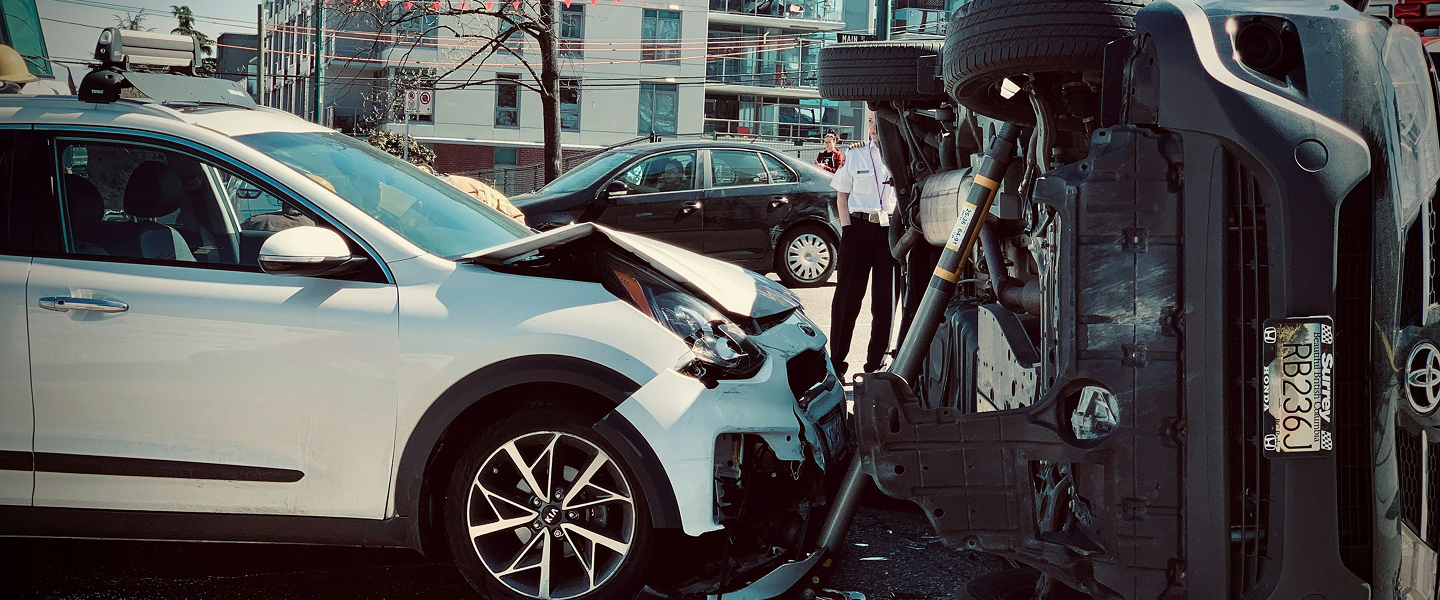
The general rule is that the measure of damages for a total loss vehicle is the price at which the vehicle can be sold at public sale or in the open market. Tatone v. Chin Bing (1936) 12 Cal.App.2d 543, 545-46. The judicial test of market value depends upon the fact that the property in question is marketable at a given price, which in turn depends upon the fact that sales of similar property have been, and are being, made at ascertainable prices. San Diego Water Co. v. San Diego (1897) 118 Cal. 556, 633.
California Civil Jury Instruction § 3902J provides further instructions regarding total loss compensation. But calculating the reasonable value of a total loss vehicle is complicated and can raise several issues. Most insurance companies hire a third party company to evaluate the total loss and the fair market value of the total loss vehicle. Therefore, it is important to understand what constitutes a fair compensation before getting ready to bat with the adversary, whether it is your own insurance company or the at-fault party’s carrier. Here are some factors to consider when evaluating a total loss report:
1. Finding Comparable Vehicles
The first place everyone goes to check the price of their vehicle is the Kelley Blue Book. Although the Kelley Blue Book is a great place to start to get an idea of what a total loss vehicle would be valued, the Kelley Blue Book does not consider several other factors, including recent purchases and public auctions, additional components, recent modifications, etc. as required by California law. After getting a starting point from Kelley Blue Book, the next thing to do is to find comparable vehicles that are being sold within fifty to a hundred miles from the residence of the owner of the vehicle. There are dozens of websites including Edmunds, Autotraders, and Cars.com that can assist in locating them. It is best to find four to six comparable vehicles.
Make sure that the comparable vehicles are the same year, make, model, and have similar mileage. If there are none that are similar, it is possible to make the argument fore vehicles within one to two years and the mileage that is not too far apart. Another important factor is to make sure that the vehicles have the same history – if the vehicle was purchased as a certified pre-owned vehicle from a dealership, make sure the comparable vehicles are also certified pre-owned. If the vehicle was never involved in an accident, make sure the comparable vehicles do not have a history of second-hand parts, which would decrease their value. If there are none with the same history, make sure to raise the argument during negotiations. Also, factor in the use of the vehicle. If the driver of the vehicle is a student or an employee who makes long trips, the wear and tear on the vehicle will be different compared to someone who uses the vehicle in a city and is often stuck in stop-and-go traffic.
2. Factoring in Additional Parts & Modifications
Tires need to be replaced between 25,000 to 60,000 miles, depending the use. Brakes are changed every 30,000 to 70,000 and brake pads are changed every 25,000 to 60,000 miles. Most new vehicles undergo maintenance checks every 10,000 to 20,000 miles. Make sure that if the tires, brakes, brake pads, or other components of the vehicle were recently changed prior to the collision, to include a copy of the receipt when making the evaluation. If there is no receipt use similar parts and include a copy. This will significantly change the value of the total loss vehicle.
Often times, people make modifications to their vehicles. This includes new rims, tints, an exhaust pipe, floor mats, child seats, booster seats, stereo equipment, roof rack, surf rack, etc. If anything was added to the total loss vehicle, find the receipt or a comparable model, and also include it.
3. Factoring in Warranty
If there was a warranty purchased at the time the vehicle was purchased, the owner is entitled to compensation for the remaining years left on the warranty. This calculation must be done by apportionment. For example, if a ten year warranty was purchased and the vehicle was totaled after five years, then compensation should be received for the remaining five years.
4. Factoring in Your Deductible
If the owner of the vehicle’ insurance company is making the claim and liability is yet to be determined, chances are the insurance company will subtract the deductible from the total loss payout. Do not be hesitant to ask the insurance company to waive the deductible given the circumstances surrounding the collision.
5. When Your Vehicle is a Lease vs. a Purchase
If the vehicle was purchased, as discussed above, the owner of the vehicle will receive compensation for the full value of the fair market value. However, if the vehicle was a lease, make sure that the insurance company is aware and that they receive a copy of the most recent statement from the lienholder. Once there is a final agreement for the value of the total loss vehicle, the lienholder will be compensated for the remaining loan and the balance will be issued directly to the vehicle owner.
6. Processing Fees
Do not forget – the insurance company must also pay the sales tax of the vehicle, licensing fee, and any DMV related transfer fees.
It’s not as simple as it sounds.
Lawyers are not experts in math but they are experts in the law. Figuring out a reasonable settlement for a vehicle deemed a total loss by an insurance company is more complicated than described above. Many other factors must also be taken into consideration. Insurance companies are aware of those factors and will often oversee them. In other situations, if a lawyer is not involved in the negotiations, there is no pressure for the insurance companies to increase their offer once it has been set. Given the severity of the collision, this might be a negotiation no one would want to deal with.
It is important to understand the extent of the damages and what can be recovered based on the specific facts surrounding the claim. It is just as important to consult an attorney in your state immediately following a collision to better understand and protect your legal rights. Do not wait, never hesitate, and reach out to a professional who is ready to work for you.